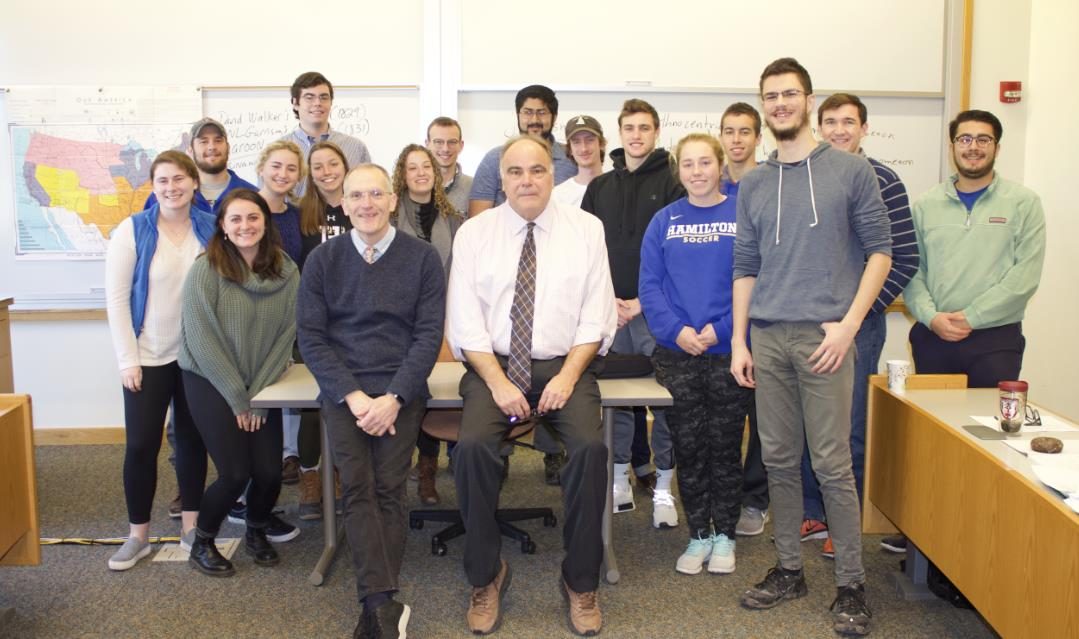
Timothy Minella graduated from Hamilton College in 2009, Phi Beta Kappa, with a double major in physics and political science. He went on to receive a Presidential Scholarship from the University of South Carolina, earning a Ph.D. in the history of science. Dr. Minella was hired by the Lewis Honors College at the University of Kentucky on a succession of term appointments before becoming senior fellow at the Goldwater Institute’s Van Sittert Center for Constitutional Advocacy. He knows of “wokeness” in the academy from firsthand experience.
The decision by two top universities to end the “diversity statement” often required in academic hiring—a gauntlet long dreaded by non-leftist applicants—is just a small step, according to Dr. Minella, a former undergraduate fellow of The Alexander Hamilton Institute for the Study of Western Civilization (AHI). The “diversity, equity, and inclusion” or DEI ideology, rigidly enforced in American higher education, is being technically rolled back at two schools, the Massachusetts Institute of Technology and Harvard. But this action, he writes in a July 24th article, “Diversity-Statement Bans Don’t Go Far Enough” for The James G. Martin Center for Academic Renewal, “will do very little to free campuses from DEI’s grip. Higher-ed reformers must seek to roll back the DEI regime on all fronts.”
Indeed, Dr. Minella could point the finger at Hamilton College for its long-established diversity statement. He describes how it works: “[D]uring the past decade … It seemed nearly every job opening, from assistant professor of history to dean of an engineering college, asked applicants to write a statement discussing their experience with DEI and their commitment to advancing it. In some cases, hiring committees reviewed the diversity statement … before even considering a candidate’s scholarship and teaching.”
Legislatures in nine states, including Florida, Texas, and North Carolina, have now passed measures to end the requirement for such de facto loyalty oaths. In the spring, MIT and Harvard dropped it. The policy “clashed too jarringly,” Dr. Minella explains, “with values that academics still profess to defend … academic freedom and free expression.” As Randall Kennedy, a Harvard law professor and avowed left-wing scholar admitted, “‘DEI statements … essentially constitute pledges of allegiance that enlist academics into the DEI movement’” by relatively soft—but nonetheless coercive—means.
Some universities are reportedly “burying diversity-statement requirements within the application process, away from online application systems that the public can scrutinize.” In a nutshell, they leave “the DEI regime largely intact.”
What can be done against this bad-faith resistance? Dr. Minella, following proposals by the Goldwater Institute and the Manhattan Institute, has several sensible recommendations in mind that he outlines in his article.