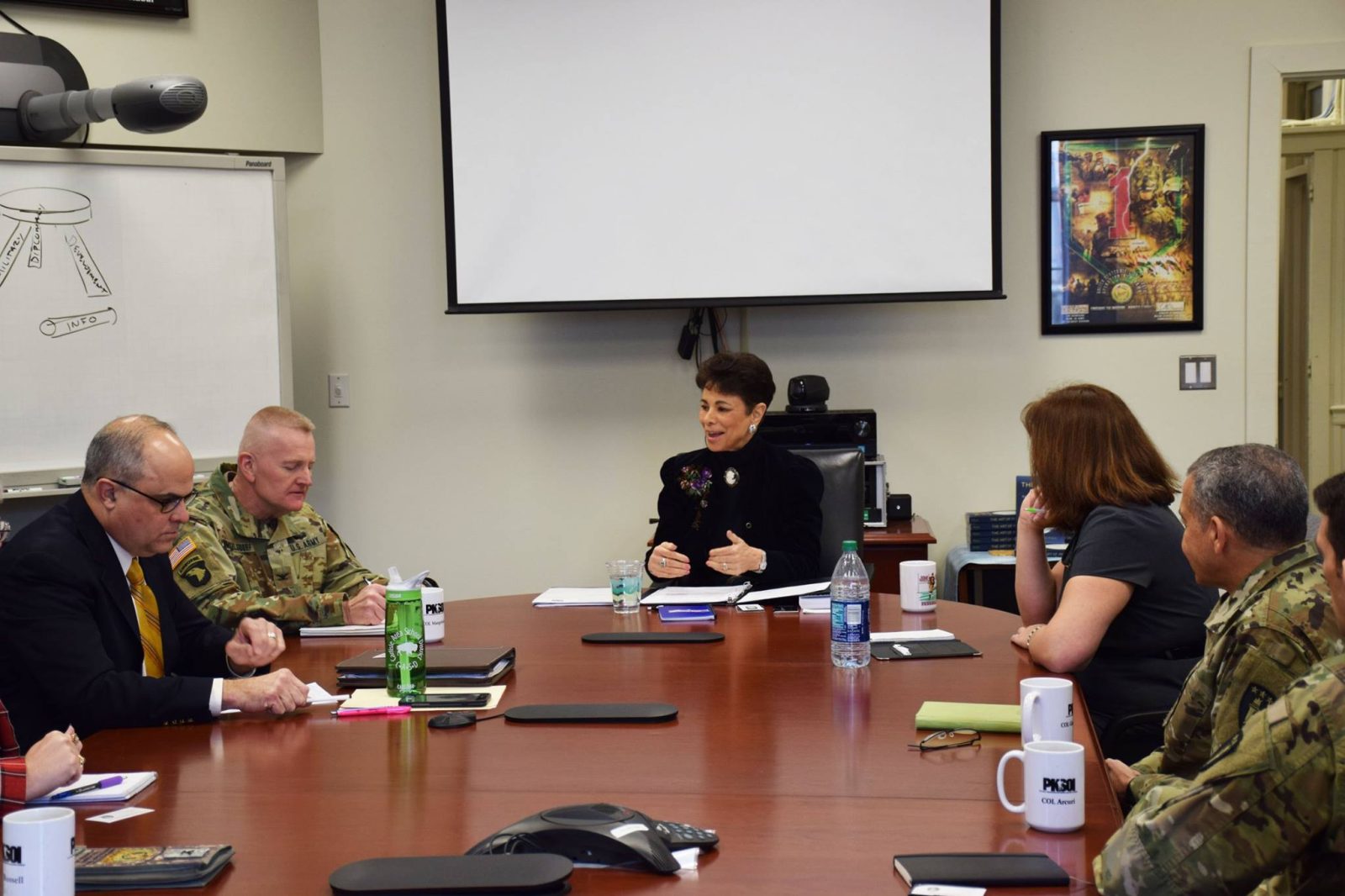
Juliana Pilon, Senior Fellow, The Alexander Hamilton Institute for the Study of Western Civilization (AHI), recounts the remarkable story of Joseph Scheinmann, a World War II resistance warrior. Dr. Pilon urges readers to take inspiration from Scheinmann’s stunning courage, resourcefulness, and unshakable sense of responsibility to his fellow man.
Dr. Pilon reviews Diana Mary Henry’s I Am André: German Jew, French Resistance Fighter, British Spy in the February issue of New English Review. The teenage Scheinmann was an anti-Nazi in Munich, following in the footsteps of his father Max, a former World War I officer who, in 1923, “began speaking out in public meetings, travelling across Germany to rally veterans against Hitler.” He had the foresight to obtain French visas for his family, which eventually enabled them to leave after the Nazis took power.
Joseph Scheinmann joined the French army and would later, during the war, work undercover (as “Andre”) with the German high command in Nazi-occupied France. He “learned what types of German troops were moving when and where” and other indispensable information vital to the British military’s war effort. Arrested in 1942, he admitted nothing to the Nazis, despite torture and interrogation. Sent to one of their harshest concentration camps, Natzweiler-Struth in the Alsace region, he survived through “endless ingenuity, reinforced by providence and luck.”
Scheinmann worked as a translator for French inmates, which provided many opportunities to help them; he was also able to “recommend the most vulnerable inmates for placement in easier jobs.” Moved to the Allach and Dachau camps where the odds of survival were tiny, he kept a positive attitude throughout, recalling later that his “upbringing, traditional Judaism and bourgeois habits” allowed him to do so. He learned, Dr. Pilon observes, that “preserving one’s dignity is lifesaving” in such a situation.
Sadly, his parents were trapped in Germany because the State Department denied their visa applications to join their family in the United States. They were gassed at Auschwitz. Although he “must have known the Roosevelt Administration’s record of restricting Jewish emigration during the war to a mere trickle,” Scheinmann “did not deflect responsibility from himself.”
Scheinmann “loved America,” eventually spending the rest of his life there. More than 40 years after he moved to the U.S. in 1994. His son Michel put him in touch with Diana Mara Henry who had been researching the Holocaust. “The photojournalist-turned-Holocaust scholar would spend three decades collecting countless personal papers and incorporating newly declassified documents.”
Henry uncovered much about how widespread resistance to the Nazis was in Europe. From a doctor’s report and other survivors’ writings, she also learned of Scheinmann’s “life-long illnesses,” most of them “inflicted by camp guards.”
Scheinmann traced his adamant convictions to what he called “a deeper awakening to Zionism and to my place in Jewish history” inspired by discussions with friends back in the 1920s. He also understood that no “ethnicity or religion has a monopoly on character; each of us is an individual. This, he knew, was America’s founding creed as well, which is why he was so fond of America.”
Scheinmann’s book holds a message to the generations who would come after him. “‘Freedom of mind and physical freedom are a must … one must never give up. This is why so many women and men went to the ends of the earth, never to come back. And we few survivors must make sure their sacrifice was not in vain.’”
Dr. Pilon concludes with this challenge to readers: “Joseph/André did his part. It’s our turn.”
Dr. Pilon, who holds a Ph.D. in philosophy from the University of Chicago, has taught at the National Defense University, American University, and George Washington University, among other institutions. She is the author of several books, including The Utopian Conceit and the War on Freedom (2019) and An Idea Betrayed: Jews, Liberalism, and the American Left (2023).